
Choosing between buying a condo and renting one is an important decision that can affect your finances, lifestyle, and future plans. Both options offer advantages, but the right choice depends on your budget, location, financial situation, and how long you plan to stay in one place. While buying a condo allows you to build property ownership, renting gives you more flexibility and fewer long-term responsibilities.
Understanding condo vs. rent also requires knowing that these terms do not describe opposite things. A condo (condominium) is a type of residential property, while rent refers to the money paid to live in a property owned by someone else. You can purchase a condo and own it, or rent a condo from its owner. The real decision is whether buying or renting a condominium makes more sense for your circumstances.
In this guide, we’ll explain the difference between a condo and rent, compare the pros and cons of buying vs. renting a condo, explore important costs, and provide practical examples to help you make an informed decision.
Quick Answer: Condo vs. Rent
A condo is an individually owned residential unit within a larger building or community, while rent is the payment made to use a property that belongs to someone else. You can either buy a condo and build equity or rent one for greater flexibility. Buying may suit long-term residents with sufficient savings, while renting can be better for people who need flexibility or want to avoid ownership costs.
Why Do People Confuse Condo and Rent?
People often confuse condo and rent because both terms are commonly used when discussing homes, apartments, and residential living. However, they have different meanings and describe separate aspects of housing.
A condo refers to a specific type of residential property. It is usually an individually owned unit within a larger residential building or community. Rent, on the other hand, refers to the money someone pays to use a property owned by another person or organization.
For example, someone might say, “I own a condo,” while another person says, “I rent a condo.” Both statements describe living in a condominium, but the ownership arrangements are different.
Here are the main distinctions:
- Condo: A type of residential property that can be individually owned.
- Rent: Money paid regularly to use someone else’s property.
- Buying a condo: Purchasing a condominium and becoming its owner.
- Renting a condo: Paying a property owner to live in their condominium.
- Condo ownership: Having ownership rights and responsibilities associated with a specific residential unit.
The important thing to remember is that condo and rent are not direct opposites. The more useful comparison is buying a condo vs. renting a condo.
What Does Condo Mean?

A condo, short for condominium, is an individually owned residential unit located within a larger building or residential community.
When someone purchases a condo, they own their particular unit rather than the entire building. The property may include bedrooms, bathrooms, a kitchen, a living room, and other private spaces.
Condominium communities often have shared facilities, such as swimming pools, fitness centers, elevators, parking areas, gardens, and hallways. These common areas are generally managed by a homeowners association (HOA) or condominium association.
Condo owners may have to pay monthly or annual HOA fees to help maintain shared facilities, manage the building, and cover certain community expenses.
Unlike renting, purchasing a condo gives someone ownership rights. However, it also comes with financial responsibilities, including property taxes, mortgage payments, insurance, maintenance, and association fees.
Examples of condo in sentences:
- My parents purchased a beautiful condo near the beach.
- She owns a modern condo in the city.
- Their condo has two bedrooms and a private balcony.
- We are looking for a condo with a swimming pool.
- He rents out his condo to a young professional.
When Should You Use Condo?
Use condo when discussing:
- A specific type of residential property.
- Buying or selling a condominium.
- Condo ownership and property management.
- The features of a condominium building.
- Shared facilities and condominium association rules.
For example:
“We purchased a condo near the university.”
This sentence is correct because condo identifies the type of property being purchased.
What Does Rent Mean?
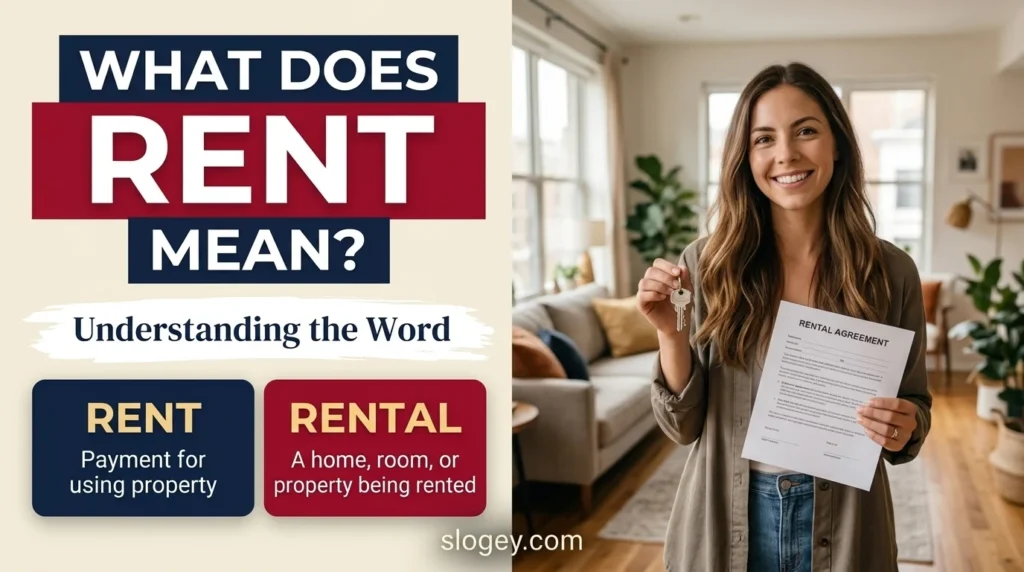
Rent refers to the money someone pays to use a property owned by another person or organization. It can also be used as a verb to describe paying for the temporary use of a home, apartment, condo, office, or other property.
When someone rents a condo, they generally do not own the unit. Instead, they pay the landlord or property owner according to an agreed rental agreement or lease.
Rent is commonly paid monthly, although some rental arrangements require weekly or other scheduled payments.
For example, someone might rent a house, apartment, condominium, office, or vacation property. The property owner is responsible for certain ownership expenses, while the tenant follows the rental agreement and pays the agreed rent.
Examples of rent in sentences:
- I pay rent at the beginning of every month.
- They rent a small apartment near the office.
- Our monthly rent increased this year.
- She wants to rent a condo with a balcony.
- We are looking for an affordable place to rent.
When Should You Use Rent?
Use rent when discussing:
- Paying to live in someone else’s property.
- Monthly or weekly housing payments.
- Renting a house, apartment, or condo.
- A landlord and tenant relationship.
- Rental agreements, leases, and security deposits.
For example:
“We rent a two-bedroom condo near the city center.”
This sentence is correct because rent explains the housing arrangement, while condo identifies the type of property.
Condo vs. Rent: What’s the Difference?
Although condo and rent are closely connected to housing, they have different meanings and grammatical uses.
| Feature | Condo | Rent |
| Meaning | A type of residential property | Payment or arrangement for using property |
| Word form | Noun | Noun and verb |
| Ownership | Can be individually owned | Tenant generally does not own the property |
| Purpose | Identifies a type of home | Describes paying to use a property |
| Related person | Condo owner | Tenant or renter |
| Common costs | Mortgage, taxes, HOA fees | Monthly rental payment |
| Example | I own a condo. | I pay rent. |
Important: You can own a condo, rent a condo, or rent another type of residential property. The words describe different things rather than mutually exclusive housing choices.
Buying a Condo vs. Renting One: Which Is Better?
If you’re deciding whether to buy or rent a condo, consider your financial situation, lifestyle, and long-term goals.
Buying can be a good option for people who want property ownership, stability, and the opportunity to build equity. Renting may be more suitable for people who need flexibility, have limited savings, or do not want the responsibilities of maintaining a property.
There is no single answer that works for everyone. Let’s look at the advantages and disadvantages of each option.
Pros of Buying a Condo
Buying a condo can provide long-term financial and lifestyle benefits, especially if you plan to stay in the same area for several years.
Here are some important advantages:
1. Build Home Equity
One of the biggest benefits of buying a condo is the opportunity to build home equity. As you make mortgage payments and your loan balance decreases, your ownership stake in the property generally increases.
You may also benefit if the property’s market value rises over time, although property values can fall as well.
2. Greater Living Stability
When you own a condo, you do not have to worry about a landlord deciding not to renew your lease or increasing your rent at renewal.
You can enjoy greater control over your living arrangements, subject to applicable laws and condominium rules.
3. Freedom to Personalize Your Space
Condo ownership generally gives you more freedom to decorate, renovate, and improve your private living space.
You may be able to update your kitchen, change flooring, or install new appliances, provided you follow applicable building regulations and association rules.
4. Potential Tax Benefits
Depending on your country and tax situation, certain homeownership expenses, such as qualifying mortgage interest or property taxes, may offer tax benefits.
However, tax deductions are not automatic and depend on local laws and eligibility requirements.
5. Potential Long-Term Investment
A condo may increase in value over time, giving you the opportunity to build wealth through property ownership.
However, real estate is not a guaranteed investment. Market conditions, location, property maintenance, and association finances can all affect its value.
Cons of Buying a Condo
Although buying a condo has advantages, it also involves significant financial responsibilities.
Consider these potential disadvantages before making a purchase.
1. High Upfront Costs
Buying a condo usually requires a down payment, closing costs, and other initial expenses. These costs can represent a substantial amount of money.
You should have enough savings to complete the purchase without using all your emergency funds.
2. Mortgage Payments and Interest
If you finance your purchase, you will need to make regular mortgage payments. The amount depends on the loan, interest rate, repayment period, and down payment.
A higher interest rate can significantly increase the total cost of ownership.
3. HOA Fees and Special Assessments
Many condominium communities charge monthly HOA fees for maintaining shared spaces and facilities.
Additionally, owners may sometimes face special assessments when the association needs extra money for major repairs or unexpected expenses.
4. Maintenance and Repair Responsibilities
Condo owners are generally responsible for maintaining their individual units and paying for certain repairs.
Depending on the condominium’s rules, you may also share the financial responsibility for building-related maintenance.
5. Less Flexibility to Move
Selling a condo can take time and involve real estate commissions, closing costs, and other expenses.
If you expect to move within a year or two, buying may be less practical than renting.
Pros of Renting a Condo
Renting a condo can be a smart option for people who want a comfortable living space without taking on the financial responsibilities of ownership.
Here are some common advantages:
1. Lower Upfront Financial Commitment
Renting generally requires less money upfront than buying a condo. You may need to pay a security deposit, the first month’s rent, and certain other fees, but you usually do not need a large down payment or mortgage approval.
2. Greater Flexibility
Rental agreements often allow tenants to move when their lease ends, depending on the agreement and local rental laws.
This can be helpful if you have a temporary job, plan to relocate, or are unsure where you want to settle.
3. Fewer Maintenance Responsibilities
In many rental arrangements, the landlord or property manager handles major repairs and certain maintenance expenses.
If an appliance breaks or a plumbing issue occurs, the landlord is generally responsible for addressing problems covered by the lease and applicable laws.
4. No Direct Property Ownership Costs
Renters generally do not pay property taxes directly or take responsibility for mortgage payments.
Some ownership-related costs may still be reflected in the rental price, but tenants avoid managing these expenses themselves.
5. Opportunity to Save Money
Renting may allow you to save money for a future down payment, improve your credit score, or invest in other financial goals.
This can be especially useful if purchasing a condo would leave you with very little emergency savings.
Cons of Renting a Condo
Renting also has disadvantages that you should consider before signing a lease.
1. No Home Equity
When you rent a condo, your monthly payments do not build ownership in the property.
Unlike mortgage payments that may gradually increase your equity, rent generally provides housing without giving you a financial ownership stake.
2. Possible Rent Increases
Your landlord may increase your rent when your lease is renewed, subject to local rental laws and the terms of your agreement.
Rising housing costs can make long-term budgeting more difficult.
3. Limited Personalization
Renters usually have fewer opportunities to make permanent changes to their homes.
You may need permission before painting walls, replacing fixtures, or making other significant improvements.
4. Dependence on the Landlord
Your living experience may depend on how responsive and responsible your landlord or property manager is.
Delays in handling repairs can become frustrating, especially when essential facilities stop working.
5. Less Long-Term Housing Security
A landlord may decide to sell the property, change rental terms, or not renew the lease when legally permitted.
This can mean finding another home and dealing with moving expenses.
Buying vs. Renting a Condo: Comparison Table
The following table highlights the major differences between buying a condo and renting a condo.
| Factor | Buying a Condo | Renting a Condo |
| Ownership | You own the unit | The landlord owns the unit |
| Upfront costs | Down payment and closing costs | Security deposit and initial rent |
| Monthly payments | Mortgage, taxes, insurance, HOA fees | Monthly rent and applicable utilities |
| Equity | Opportunity to build equity | No property equity |
| Maintenance | Owner handles applicable repairs | Landlord handles responsibilities under the lease |
| Flexibility | Less flexible | Generally more flexible |
| Property taxes | Usually paid by the owner | Usually the owner’s responsibility |
| Renovations | More freedom, subject to rules | Usually requires permission |
| Long-term stability | Greater control over residence | Depends on the rental agreement |
| Financial risk | Property value and ownership expenses | Rent increases and housing availability |
The better option depends on your priorities. If you want long-term ownership and can comfortably afford the expenses, buying may be worth considering. If flexibility and lower upfront costs matter more, renting may be the better choice.
How to Decide Whether to Buy or Rent a Condo
Before deciding between buying and renting, consider several important factors that can influence your financial situation.
1. Consider Your Location
The cost of buying and renting a condo can vary significantly depending on where you live.
In some cities, purchasing a condo may be relatively affordable compared with renting a similar property. In other locations, high property prices can make renting more economical.
Compare properties in the same neighborhood with similar:
- Number of bedrooms and bathrooms.
- Square footage.
- Building condition.
- Parking facilities.
- Shared amenities.
- Location and accessibility.
A fair comparison should involve similar properties rather than comparing a luxury condo with a basic rental unit.
2. Evaluate Your Financial Situation
Your current finances play an important role in deciding whether to buy or rent.
Before purchasing a condo, consider whether you can comfortably afford:
- The down payment.
- Mortgage payments.
- Closing costs.
- Property taxes.
- Condo insurance.
- HOA fees.
- Repairs and maintenance.
- Emergency expenses.
If buying a condo would use nearly all your savings, renting while building a stronger financial foundation may be more sensible.
3. Think About How Long You Plan to Stay
Your expected length of stay can affect whether buying or renting makes financial sense.
If you plan to remain in the same city for several years, purchasing a condo may provide an opportunity to build equity and spread the upfront costs over a longer period.
However, if you expect to move soon because of work, education, or family circumstances, renting may offer more convenience.
There is no universal five-year rule. The right timeframe depends on your purchase costs, selling expenses, local market, and rental prices.
4. Compare Monthly Housing Expenses
Do not compare rent with only the monthly mortgage payment.
Owning a condo can involve several additional expenses, including property taxes, insurance, HOA fees, maintenance, and utilities.
For a more realistic comparison, calculate the complete monthly cost of ownership and compare it with the total cost of renting a similar condo.
5. Check Your Credit and Savings
If you need a mortgage to purchase a condo, your credit history and financial stability can influence the interest rate and loan options available to you.
A stronger financial position may help you qualify for more favorable financing terms.
If your credit score needs improvement or you have not saved enough for the down payment, renting can provide additional time to prepare.
How to Calculate the Price-to-Rent Ratio
The price-to-rent ratio is a simple way to compare the purchase price of a property with the cost of renting a similar property.
It helps you understand whether buying or renting appears more economical in a particular housing market.
Use this formula:
Price-to-Rent Ratio = Condo Purchase Price ÷ Annual Rent
For example, imagine you are comparing two similar condos:
- Condo purchase price: $300,000
- Monthly rental price: $1,900
- Annual rent: $1,900 × 12 = $22,800
Now divide the purchase price by the annual rent:
$300,000 ÷ $22,800 = 13.16
The price-to-rent ratio is approximately 13.2.
A commonly used rough interpretation is:
| Price-to-Rent Ratio | General Interpretation |
| Below 15 | Buying may be more attractive |
| 15–20 | Compare both options carefully |
| Above 20 | Renting may be more attractive |
These ranges are only general guidelines, not guaranteed financial rules. A price-to-rent ratio does not include mortgage interest, taxes, insurance, HOA fees, maintenance, closing costs, or potential changes in property values.
For a better decision, consider all ownership expenses and compare them with the total cost of renting over the same period.
15 Examples of Condo and Rent in Sentences
Understanding how these words work in everyday English can help you use them correctly.
Examples with Condo
- My parents bought a beautiful condo near the beach.
- She owns a modern condo in the city center.
- We are planning to purchase a condo next year.
- Their condo has two bedrooms and a private balcony.
- The condo includes access to a shared swimming pool.
- I would love to live in a beachfront condo.
- Our condo association recently renovated the elevators.
Examples with Rent
- I pay my rent on the first day of every month.
- They decided to rent a house near their workplace.
- Her monthly rent is higher than mine.
- We cannot afford to buy a home, so we rent.
- The landlord increased the rent this year.
- He wants to rent a furnished apartment.
- They signed a one-year rental agreement.
- We rent a condo because buying one is too expensive right now.
These examples show that condo identifies the type of property, while rent describes the payment or arrangement.
Common Mistakes When Comparing Condo and Rent
Some common misunderstandings can make it difficult to use these housing terms correctly.
Here are a few mistakes to avoid.
Mistake 1: Treating Condo and Rent as Opposites
Incorrect understanding: You must choose between owning a condo and renting.
Correct understanding: You can rent a condo from its owner. Condo describes the property, while rent describes the housing arrangement.
Mistake 2: Assuming Every Condo Is Rented
Incorrect understanding: All condos are rental properties.
Correct understanding: A condo can be purchased and owned by an individual. The owner may live there or rent the unit to another person.
Mistake 3: Comparing Rent Only With a Mortgage Payment
Incorrect comparison: Monthly rent is $1,900, while the mortgage payment is $1,700, so buying is cheaper.
Correct comparison: Include property taxes, HOA fees, insurance, maintenance, and other ownership expenses before deciding.
Mistake 4: Assuming Renting Always Saves Money
Incorrect understanding: Renting is always cheaper than buying.
Correct understanding: Renting may have lower upfront costs, but long-term expenses depend on rental prices, ownership costs, and local market conditions.
Mistake 5: Assuming Condo Ownership Means Owning the Entire Building
Incorrect understanding: Buying a condo means owning the entire residential building.
Correct understanding: A condo owner generally owns an individual unit and has shared rights and responsibilities regarding common areas.
Memory Trick: How to Remember Condo vs. Rent
A simple memory trick can help you understand the difference between these terms.
- Condo = Property: Think of a residential unit that someone can own.
- Rent = Payment: Think of the money paid to use someone else’s property.
- Buy a condo = Ownership: You purchase the property.
- Rent a condo = Housing arrangement: You pay the owner to live in the property.
Remember these sentences:
- “I own a condo.” (You own the residential unit.)
- “I pay rent.” (You pay to use someone else’s property.)
- “I rent a condo.” (You pay to live in a condominium owned by someone else.)
The easiest way to remember the difference is that condo describes the home, while rent describes the payment or arrangement.
Condo vs. Rent in American and British English
The words condo and rent are used in both American and British English, but some housing terms differ between the two varieties.
In American English, condo is a common shortened form of condominium. People frequently use it when discussing individually owned residential units in apartment-style buildings or residential communities.
In British English, people commonly use the word flat for an apartment-style home. However, a flat is not automatically equivalent to an American condominium because the ownership arrangements can differ.
The word rent is commonly used in both varieties of English to describe paying for the use of a property.
American English examples:
- We bought a condo in New York.
- I rent an apartment near my office.
- Our monthly rent is affordable.
British English examples:
- We bought a flat in London.
- I rent a flat near my workplace.
- Our monthly rent has increased.
Remember that flat, apartment, and condo are related housing terms, but they do not always describe identical property arrangements.
Similar Words Related to Condo and Rent
Learning related housing vocabulary can make it easier to understand property discussions and communicate more naturally.
| Word | Meaning |
| Apartment | A residential unit within a larger building |
| Condominium | An individually owned residential unit in a larger property |
| Flat | A commonly used British English term for apartment |
| Tenant | A person who rents a property |
| Landlord | A person who rents property to someone else |
| Lease | A legal agreement allowing someone to use a property for a specific period |
| Rental | Something available for rent or the act of renting |
| Mortgage | A loan used to purchase property |
| Homeowner | Someone who owns a home |
| Equity | The value of a property that the owner owns after subtracting outstanding debt |
| HOA | A homeowners association that manages a residential community |
| Down Payment | An upfront amount paid toward purchasing a property |
These terms are useful when discussing homeownership, rental agreements, property purchases, and housing expenses.
Final Verdict: Should You Buy a Condo or Rent One?
Choosing between buying and renting a condo depends on your financial position, lifestyle, and future plans.
Buying a condo may be the better choice if you have sufficient savings, stable income, manageable debt, and plans to stay in the same location for several years. It offers property ownership and the opportunity to build equity, but it also comes with mortgage payments, taxes, HOA fees, insurance, and maintenance responsibilities.
Renting a condo may be more suitable if you need flexibility, want lower upfront expenses, or are still saving for a property purchase. It allows you to enjoy a comfortable living space without taking direct responsibility for many ownership expenses, although rent increases and lease restrictions can affect your long-term plans.
Ultimately, neither option is automatically better. Compare the complete costs, consider how long you intend to stay, and choose the arrangement that supports your financial goals and lifestyle.
Frequently Asked Questions
1. Is a condo the same as rent?
No, a condo and rent are not the same. A condo is a type of residential property, while rent is the money paid to use a property owned by someone else. You can own a condo or rent one from its owner.
2. Is it better to buy a condo or rent one?
It depends on your financial situation and future plans. Buying may be better if you want long-term ownership and can afford the additional expenses. Renting may be better if you need flexibility or want to avoid a large upfront investment.
3. Can you rent a condo instead of buying one?
Yes, you can rent a condo instead of buying one. Many condo owners rent their units to tenants through a lease or rental agreement. This allows tenants to live in a condominium without purchasing the property.
4. What are the disadvantages of buying a condo?
The disadvantages of buying a condo include high upfront costs, mortgage payments, property taxes, HOA fees, maintenance responsibilities, and less flexibility when moving. Property values can also decrease, creating financial risks for owners.
5. What are the advantages of renting a condo?
Renting a condo generally requires less upfront money, provides greater flexibility, and reduces direct responsibility for major property repairs. It can also give you time to save money and improve your financial position before buying a home.
6. Is renting a condo cheaper than buying one?
Renting can be cheaper in the short term because it usually requires less upfront money. However, the long-term cost depends on monthly rent, mortgage payments, interest rates, HOA fees, taxes, insurance, and maintenance expenses.
7. How long should you live in a condo before buying?
There is no fixed amount of time. However, buying may become more attractive when you plan to stay for several years because you have more time to spread out purchase and selling costs. Your local housing market and personal finances should also influence the decision.
8. Can you build equity by renting a condo?
No, regular rent payments generally do not build property equity for tenants. Equity is associated with ownership. However, renting may help you save money toward a future down payment if your overall housing expenses are manageable.
Remember This
- Condo = A type of residential property.
- Rent = Money paid to use someone else’s property.
- Buying a condo = Purchasing and owning a residential unit.
- Renting a condo = Paying to live in a condominium owned by someone else.
- Building equity = Increasing your ownership stake in a property.
- HOA fees = Payments toward shared residential facilities and community management.
- Price-to-rent ratio = A comparison of a property’s purchase price with its annual rental cost.
The key difference is simple: condo describes the property, while rent describes the payment or housing arrangement. When deciding whether to buy or rent, compare your complete costs and long-term goals rather than looking at monthly payments alone.
Conclusion
Understanding condo vs. rent helps you make better decisions about housing and use these terms correctly in everyday conversations. A condo is an individually owned type of residential property, while rent is the payment made to live in a property that belongs to someone else. You can purchase a condominium, rent one, or rent another type of home, such as an apartment or house.
When deciding whether to buy or rent a condo, consider your budget, savings, location, maintenance expenses, and how long you plan to stay. Buying can provide ownership and the opportunity to build equity, while renting offers flexibility and fewer direct ownership responsibilities. By comparing both options carefully, you can choose the housing arrangement that best fits your needs and financial future.

I am Samantha Rose, a passionate slogan writer who loves creating catchy, meaningful, and memorable slogans that help brands communicate their ideas clearly and creatively.