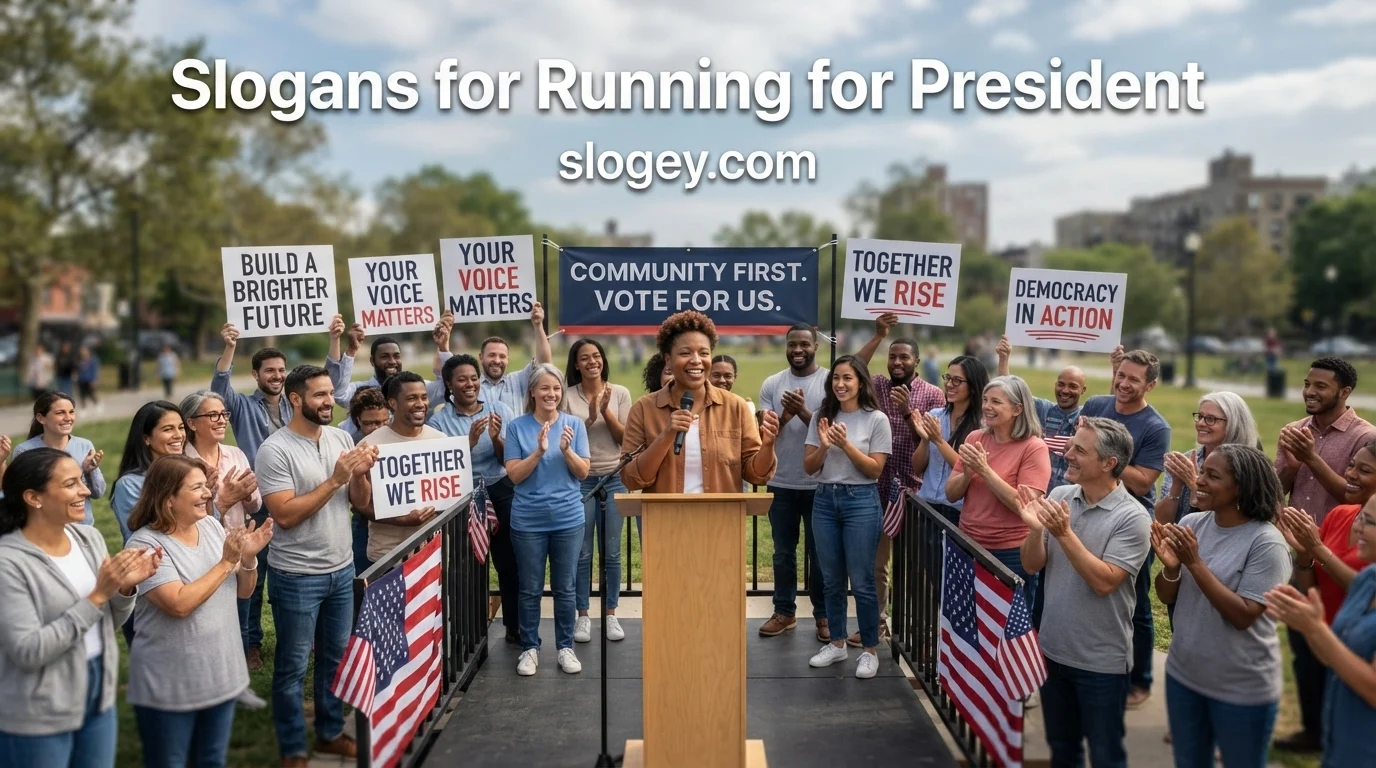
Choosing effective slogans for running for president can be an important part of understanding how political campaigns communicate with the public. A short phrase can summarize a campaign theme, express a broad goal, or give voters an easy way to recognize a candidate’s message.
If you are researching presidential campaign slogans, political advertising, or election messaging, you may notice that the strongest phrases are usually short, easy to remember, and connected to a larger campaign theme. However, a slogan should not replace detailed information about policies, qualifications, experience, or a candidate’s record.
This guide explores different styles of presidential campaign slogans from a neutral, educational perspective. Instead of promoting a particular candidate or political viewpoint, the examples below focus on general wording patterns and fictional concepts that can help readers understand how campaign messaging is constructed.
What Are Slogans for Running for President?
Slogans for running for president are short phrases designed to communicate a campaign’s central theme or identity. They may emphasize ideas such as leadership, public service, opportunity, unity, responsibility, progress, or community.
A presidential slogan is usually much shorter than a campaign speech or policy platform. Its purpose is to make a broad message easier to recognize and remember. Because a slogan cannot explain complicated political issues by itself, responsible campaigns generally pair memorable messaging with detailed information about their positions and plans.
Good campaign messaging should also be clear about what it represents. Readers and voters benefit when slogans are considered alongside reliable information about candidates, policies, qualifications, and records.
Leadership-Themed Slogan Ideas
Leadership is a common theme in political communication. These fictional examples demonstrate the structure of leadership-oriented messaging without supporting a real candidate or political position.
- Leadership With Purpose
- A Clearer Path Forward
- Service Before Self
- Leadership That Listens
- Ready to Serve
- Responsible Leadership
- Experience With Purpose
- A Voice for Public Service
- Leading With Responsibility
- The Work of Leadership
- Service, Integrity, Responsibility
- Leadership Starts With Listening
- Focused on Public Service
- A Commitment to Responsible Leadership
- Leadership for the Next Chapter
Best pick: Leadership That Listens — short, clear, and easy to understand.
Unity-Focused Slogan Ideas
Unity-oriented messaging often emphasizes cooperation and respectful civic participation. The following are fictional examples created for educational purposes.
- Together With Purpose
- Many Voices, One Community
- United Through Service
- Working Together
- A Shared Future
- Common Ground, Shared Goals
- Stronger Through Cooperation
- Building Together
- One Community, Many Voices
- Progress Through Partnership
- Listening Across Differences
- Cooperation for the Future
- Shared Ideas, Shared Responsibility
- Working Across Communities
- Respect, Cooperation, Service
Best pick: Many Voices, One Community — it communicates inclusion without promoting a specific political position.
Future-Focused Campaign Slogans
Future-oriented campaign messaging can focus on planning, preparation, innovation, and long-term thinking.
- Building for Tomorrow
- Ready for What Comes Next
- Planning Beyond Today
- A Future Worth Preparing For
- Looking Ahead
- Tomorrow Starts With Good Choices
- Preparing for the Next Generation
- Forward With Purpose
- Thinking Beyond the Present
- A Practical Path Ahead
- Focused on Tomorrow
- Preparing Today, Planning Ahead
- The Next Chapter Starts Here
- Ideas for the Future
- Looking Forward Together
Best pick: Building for Tomorrow — concise and broad enough to represent a general future-focused theme.
Community-Centered Slogan Ideas
Community messaging can highlight local experiences, civic participation, and the importance of listening to different groups.
- Every Community Matters
- Listening to Communities
- Communities at the Center
- Strong Communities, Shared Future
- Serving Every Community
- Voices From Every Community
- People and Communities First
- Connected Communities
- Working With Communities
- Community Through Cooperation
- Every Neighborhood Has a Voice
- Local Voices, National Conversation
- Serving Communities With Care
- Together Across Communities
- Communities Shape the Future
Best pick: Listening to Communities — simple and directly connected to civic engagement.
Service-Oriented Slogan Ideas
Public service is another common theme in political messaging. These examples focus on service as a general concept rather than supporting a particular political agenda.
- Service With Integrity
- Public Service Matters
- A Commitment to Service
- Serving With Purpose
- Duty, Service, Responsibility
- Service Before Spotlight
- Putting Service Into Action
- Responsible Public Service
- A Culture of Service
- Service With Accountability
- Dedicated to Public Service
- Serving With Respect
- Purpose Through Service
- Public Service With Care
- Responsibility Starts With Service
Best pick: Service With Integrity — memorable and centered on a broadly understandable value.
Integrity and Trust Slogan Ideas
Trust is frequently discussed in political communication. Campaign messaging using this theme should ideally be supported by verifiable facts and a candidate’s actual record.
- Trust Through Transparency
- Integrity in Public Service
- Honest Service Matters
- Responsibility Builds Trust
- Transparency and Accountability
- Leading With Integrity
- Trust Earned Through Action
- Clear Promises, Responsible Action
- Accountability Matters
- Integrity Starts With Service
- Responsible Leadership, Open Communication
- Earn Trust Through Service
- Transparency Builds Confidence
- Facts, Responsibility, Service
- Integrity in Every Decision
Best pick: Trust Earned Through Action — it connects trust with observable behavior rather than simply making a claim.
Hope and Positive-Minded Slogan Ideas
Positive campaign messaging can create an optimistic tone. The examples below are fictional and intentionally broad.
- Hope for Tomorrow
- A Better Chapter Ahead
- Moving Forward With Purpose
- Possibility Starts Here
- Building a Brighter Tomorrow
- Hope Through Action
- Looking Toward Better Days
- Positive Ideas, Practical Action
- A Future Full of Possibility
- Progress With Purpose
- Creating New Possibilities
- Optimism With Responsibility
- A Fresh Perspective
- Better Ideas for Tomorrow
- Forward With Hope
Best pick: Hope Through Action — it combines an optimistic idea with the importance of practical work.
Responsibility-Focused Slogan Ideas
Responsibility-based messaging can emphasize careful decision-making, accountability, and the duties associated with public office.
- Responsibility in Leadership
- Decisions With Purpose
- Accountable Public Service
- Responsible Choices Matter
- Leadership With Accountability
- Duty Before Recognition
- Careful Decisions, Clear Responsibility
- Serving With Accountability
- Responsibility for Tomorrow
- Public Trust, Public Responsibility
- Decisions That Deserve Attention
- Responsible Leadership Starts Here
- Accountability Every Day
- Service With Responsibility
- A Commitment to Accountability
Best pick: Public Trust, Public Responsibility — it links public confidence with the responsibilities of office.
Simple and Memorable Slogan Ideas
Some political slogans are intentionally short. These fictional examples demonstrate how a campaign theme can be expressed using only a few words.
- Listen. Serve. Lead.
- Service Matters
- Lead With Purpose
- Think Forward
- Together With Purpose
- Serve With Integrity
- Focus on the Future
- Listen and Serve
- Purpose in Action
- Responsibility First
- Work for Tomorrow
- Lead by Listening
- Service Starts Here
- Ideas Into Action
- Forward With Purpose
Best pick: Listen. Serve. Lead. — its three-word structure makes it particularly easy to remember.
Modern and Conversational Slogan Ideas
Modern political communication often favors straightforward language rather than complicated terminology. These fictional examples use a conversational style.
- Let’s Talk About Tomorrow
- Listen First
- Ideas That Matter
- A Conversation About the Future
- Let’s Work Together
- Questions Matter
- People Deserve Clear Answers
- Better Conversations, Better Understanding
- Start With Listening
- Facts Matter
- Keep the Conversation Open
- Talk, Listen, Serve
- Clear Messages, Clear Goals
- Ask Questions, Seek Answers
- Understanding Before Action
Best pick: Start With Listening — it is conversational, approachable, and focused on civic dialogue.
How to Create Your Own Slogans for Running for President
Creating a memorable political slogan requires more than combining impressive words. The phrase should connect naturally with the broader campaign identity and should not make claims that cannot be supported.
Keep It Short:
Try to express one central idea rather than several unrelated promises. Short phrases are generally easier to remember and reproduce across campaign materials.
Choose One Clear Theme:
Decide if the message is about leadership, service, unity, responsibility, opportunity, or another broad theme. A focused message is easier for an audience to understand.
Make Claims Verifiable:
Avoid slogans that present unsupported achievements, statistics, or promises as facts. Campaign communication should be consistent with reliable evidence and the candidate’s actual record.
Test the Wording:
Read the phrase aloud and ask if we someone unfamiliar with the campaign would understand it immediately. Check spelling, tone, clarity, and if you phrase could be misunderstoofqs.
FAQS:
A memorable slogan is usually short, clear, distinctive, and connected to one central theme.
How long should a campaign slogan be?
There is no universal rule, but shorter phrases are often easier to remember and display on signs, websites, and other campaign materials.
Should a presidential slogan mention a candidate’s name?
It can, but it does not have to. Some campaign messages focus on a person’s name, while others emphasize a theme or campaign idea.
Can a slogan replace a political platform?
No. A slogan is a brief communication tool. A complete political platform should provide substantially more information about policies, priorities, and proposed actions.
Should campaign slogans make promises?
Any campaign promise should be realistic and clearly explained. A slogan alone cannot provide the context needed to evaluate a complicated proposal.
What words commonly appear in political slogans?
Words related to leadership, service, unity, responsibility, progress, opportunity, future, community, and trust are common themes.
How can I evaluate a presidential slogan?
Consider whether it is clear, accurate, memorable, appropriate for the intended audience, and consistent with the candidate’s documented positions and record.
Conclusion
The best slogans for running for president are not necessarily the loudest or most complicated. Effective political messaging generally works best when it communicates one understandable idea and connects that idea to a broader campaign identity.
if you are researching presidential campaign slogans, studying political advertising, or developing fictional campaign examples, remember that a slogan is only one small part of political communication. Voters and readers should also examine reliable information, policy details, qualifications, records, and evidence before making political judgments.

I am Tommy Thomas, a passionate slogan writer dedicated to creating memorable, creative, and meaningful slogans that help brands communicate their ideas clearly and effectively.