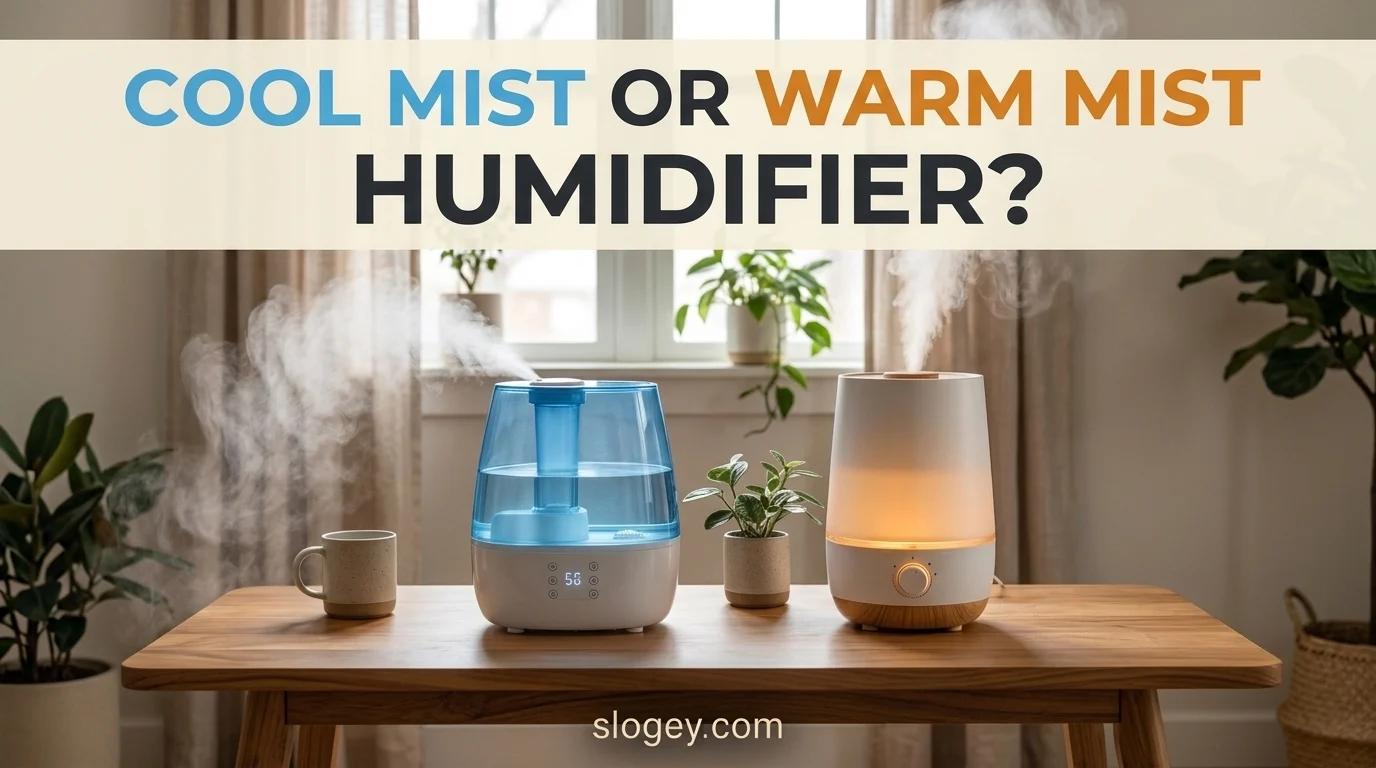
Cool Mist or Warm Mist Humidifie
Choosing between a cool mist or warm mist humidifier can be confusing, especially when you or your child has a cold. Both types of humidifiers add moisture to indoor air, but they work differently. A cool mist humidifier releases moisture without heating water, while a warm mist humidifier heats water to produce warm vapor. Although both can increase indoor humidity, their safety considerations and everyday uses are different.
If you are wondering which humidifier is better for coughing, congestion, a stuffy nose, or cold symptoms, the answer depends on who will use it and where it will be placed. Cool mist humidifiers are generally recommended for children because they do not contain boiling water or produce hot steam that could cause burns. Warm mist humidifiers may feel more comfortable in cold weather, but they require extra safety precautions.
In this guide, you’ll discover how cool mist and warm mist humidifiers work, their benefits and disadvantages, which type may help with cold-related discomfort, and how to use and clean them safely. You’ll also learn the important differences so you can choose the right humidifier for your home or bedroom.
Quick Answer: Cool Mist or Warm Mist Humidifier?
A cool mist humidifier is generally recommended for children with colds because it avoids the burn risk associated with hot water and steam. Both cool mist and warm mist humidifiers can add moisture to indoor air. Cool mist may help ease coughing and congestion, although research on symptom relief is limited. Neither type is proven to cure a common cold.
Why Do People Confuse Cool Mist and Warm Mist Humidifiers?
People often confuse cool mist vs. warm mist humidifiers because both appliances perform the same basic function: adding moisture to indoor air. They are commonly used in bedrooms, nurseries, and living spaces when the air feels dry.
The main difference is how they produce moisture. A cool mist humidifier releases room-temperature or cool moisture, while a warm mist humidifier heats water to produce warm vapor.
Another reason for confusion is that people often assume warm mist must work better for colds because warm vapor sounds more soothing. However, the temperature of the mist does not automatically make one type more effective at humidifying the air or relieving cold symptoms.
According to Mayo Clinic, cool mist and warm mist humidifiers are equally effective at humidifying indoor air. By the time water vapor reaches the lower airways, its temperature is essentially the same, regardless of the type of humidifier used.
What Is a Cool Mist Humidifier?

A cool mist humidifier is an appliance that increases indoor humidity by releasing cool or room-temperature moisture into the surrounding air. It does not boil water or use a heating element to produce steam.
This type of humidifier is commonly used in bedrooms, nurseries, and family living spaces. It is particularly useful in households with children because it avoids the hot-water and steam burn hazards associated with warm mist models.
How Does a Cool Mist Humidifier Work?
Cool mist humidifiers generally use two main technologies:
- Ultrasonic humidifiers: These use high-frequency vibrations to break water into tiny droplets, creating a visible cool mist.
- Evaporative humidifiers: These use a fan to move air through a wet wick or filter, allowing moisture to evaporate naturally into the room.
Both methods add moisture without boiling water.
Benefits of a Cool Mist Humidifier
A cool mist humidifier offers several advantages:
- Child safety: It does not produce boiling water or hot steam, making it a safer choice around children.
- Cold symptom comfort: It may help ease coughing and nasal congestion associated with a cold by adding moisture to dry air.
- Year-round use: It can be used during both warm and cold seasons.
- No heating element: It does not need to boil water to release moisture.
- Quiet operation: Many ultrasonic models operate quietly, making them suitable for bedrooms.
- Everyday comfort: It can help improve comfort when indoor air becomes too dry.
Disadvantages of a Cool Mist Humidifier
Despite its benefits, a cool mist humidifier has a few disadvantages:
- Dirty standing water can allow bacteria and mold to grow.
- Ultrasonic models may release minerals from tap water into the air, creating white dust.
- Evaporative models may require regular filter replacement.
- The water tank and internal surfaces need frequent cleaning.
- Poor maintenance can allow microorganisms and mineral deposits to spread into indoor air.
Using distilled or purified water with a low mineral content and cleaning the appliance regularly can help reduce these problems.
What Is a Warm Mist Humidifier?

A warm mist humidifier is an appliance that heats water to produce warm vapor, which is released into indoor air to increase humidity.
It is also commonly known as a steam vaporizer. Many people prefer warm mist humidifiers during colder months because the warm vapor may feel more comfortable in a cool room.
However, warm mist humidifiers require extra care, particularly in homes with young children or pets, because hot water and steam can cause burns.
How Does a Warm Mist Humidifier Work?
A warm mist humidifier uses a heating element to heat water inside its reservoir or heating chamber. The heated water produces steam, which is released into the room.
The moisture gradually mixes with the surrounding air and cools as it moves away from the appliance.
Unlike ultrasonic cool mist humidifiers, warm mist models generally leave most dissolved minerals behind in the water chamber. This means they are less likely to produce airborne white mineral dust.
Benefits of a Warm Mist Humidifier
Here are some common benefits of warm mist humidifiers:
- Warm vapor: It may feel comfortable when indoor temperatures are low.
- Reduced airborne mineral dust: It generally produces less mineral dust than ultrasonic cool mist models.
- Heating process: Heating water can reduce many microorganisms in the water before vapor is released.
- Quiet operation: Many warm mist models operate quietly.
- Cold-weather comfort: It provides moisture without releasing cool mist into the room.
Disadvantages of a Warm Mist Humidifier
Warm mist humidifiers also have some disadvantages:
- Hot water and steam can cause serious burns.
- They are not generally recommended for children’s rooms because of the burn risk.
- Heating water usually requires more electricity.
- Mineral deposits can accumulate inside the heating chamber.
- They need regular cleaning and descaling.
- Their warm vapor does not make them more effective at treating a common cold.
Cool Mist vs. Warm Mist Humidifier: What’s the Difference?
Both humidifier types increase indoor humidity, but they differ in temperature, operating methods, energy requirements, and safety considerations.
| Feature | Cool Mist Humidifier | Warm Mist Humidifier |
| Mist temperature | Cool or room temperature | Warm vapor |
| How it works | Uses evaporation or ultrasonic vibrations | Heats water to produce vapor |
| Water heating | No | Yes |
| Cold symptoms | May help ease coughing and congestion | No established advantage over cool mist |
| Child safety | Generally safer | Hot water and steam create burn risks |
| Energy consumption | Usually lower | Usually higher |
| White mineral dust | Possible with ultrasonic models | Generally less likely |
| Noise | Depends on the model | Often quiet |
| Cleaning | Requires regular cleaning | Requires cleaning and descaling |
| Best use | Year-round household use | Personal preference in colder weather |
Important: Both types are equally effective at adding moisture to indoor air. The temperature of the mist does not determine how much humidity the appliance can provide. Actual performance depends on the model, room size, and operating conditions.
Cool Mist or Warm Mist Humidifier: Which Is Better for a Cold?
If you are choosing a humidifier for someone with a common cold, a cool mist humidifier is generally the preferred option for children because it avoids the risk of burns from hot water and steam.
Mayo Clinic explains that cool mist humidifiers may help ease coughing and congestion caused by a cold, although more research is needed to confirm their benefits. Research has also found that heated humidifiers do not provide a clear improvement in cold symptoms.
This means that choosing warm mist does not necessarily provide better relief just because the vapor feels warmer.
Which Humidifier Is Better for a Child With a Cold?
A cool mist humidifier is the safer choice for children.
Warm mist humidifiers and steam vaporizers contain hot water or produce hot steam. A child who gets too close to the appliance or accidentally spills its contents could suffer serious burns.
For this reason, keep warm mist humidifiers away from children’s bedrooms and play areas. If your child has a cold and you want to add moisture to the air, choose a properly maintained cool mist model.
Does a Warm Mist Humidifier Help With a Stuffy Nose?
Warm mist may feel soothing to some people, but there is no strong evidence that it relieves a stuffy nose better than cool mist.
Both types add moisture to indoor air. If dry air contributes to nasal discomfort, maintaining comfortable humidity may help, but a humidifier does not treat the underlying viral infection.
Can a Humidifier Cure a Cold?
No. A humidifier does not cure the common cold or eliminate the virus responsible for it.
It may help improve comfort by adding moisture to dry indoor air. However, it should be considered a supportive home-care measure rather than a medical treatment.
When Should You Use a Cool Mist or Warm Mist Humidifier?

The right humidifier depends on your household, room temperature, safety requirements, and personal preferences.
When to Use a Cool Mist Humidifier
A cool mist humidifier may be a practical choice when:
- A child or baby has a cold.
- You want to add moisture to a nursery or child’s bedroom.
- You have young children or pets at home.
- You want a humidifier for year-round use.
- Your indoor air feels dry during winter or summer.
- You want to avoid hot water and steam.
- You prefer an ultrasonic humidifier for quiet operation.
Example: If your child has a stuffy nose during a cold, a clean cool mist humidifier may help make the bedroom air more comfortable without introducing a hot-steam burn hazard.
When to Use a Warm Mist Humidifier
A warm mist humidifier may be suitable when:
- You prefer warm vapor during cold weather.
- You want to add moisture to a cool bedroom.
- There are no young children or pets who could access the appliance.
- You want to avoid the white mineral dust associated with some ultrasonic models.
- You are comfortable with the additional electricity needed to heat water.
- You can place the appliance securely away from accidental contact.
Example: If you live alone and prefer warm vapor during winter, a warm mist humidifier may suit your comfort preferences.
How to Use a Humidifier Safely
Regardless of which type you choose, proper use and maintenance are essential.
1. Clean the Water Tank Regularly
Empty the water tank, dry the surfaces, and clean the appliance according to the manufacturer’s instructions. Mayo Clinic recommends emptying the tank and drying all surfaces daily to help prevent mineral buildup and the growth of bacteria and mold.
2. Use Distilled or Purified Water
Consider using bottled water labeled distilled or purified because it generally contains fewer minerals than tap water.
This is particularly useful for ultrasonic cool mist humidifiers, which can release minerals into the air.
3. Monitor Indoor Humidity
Too much indoor moisture can encourage mold and dust mite growth.
The US Environmental Protection Agency recommends keeping indoor relative humidity below 60%, ideally between 30% and 50%.
A hygrometer can help you monitor the humidity level in your room.
4. Keep Warm Mist Humidifiers Away From Children
Never place a warm mist humidifier where a child could touch it, pull its cord, or knock it over.
Hot water and steam can cause serious burns.
5. Follow the Manufacturer’s Instructions
Different humidifiers have different cleaning and maintenance requirements. Follow the manufacturer’s guidance for water replacement, filter changes, descaling, and safe operation.
Cool Mist vs. Warm Mist Humidifier: Common Mistakes
Choosing a humidifier based on assumptions can lead to unnecessary problems. Avoid these common mistakes.
1. Thinking Warm Mist Is Better for Every Cold
Warm vapor may feel soothing, but it is not proven to relieve cold symptoms better than cool mist. Both types add moisture to the air.
2. Using Warm Mist Around Children
This is an important safety mistake. Warm mist humidifiers contain hot water and can cause burns if a child gets too close or spills the appliance.
3. Assuming Cool Mist Kills Bacteria
Cool mist humidifiers do not boil water. If their tanks are not cleaned properly, they can spread microorganisms into indoor air.
4. Forgetting to Empty the Water Tank
Leaving standing water in a humidifier can encourage microbial growth. Empty and dry the tank regularly rather than simply adding fresh water over old water.
5. Using Hard Tap Water Without Considering Mineral Dust
Some ultrasonic humidifiers release minerals from hard water into the air. Distilled water can help reduce this problem.
6. Making the Room Too Humid
Running a humidifier continuously without checking humidity can create excessive moisture. Keep indoor relative humidity at a comfortable level and avoid condensation on windows and walls.
Memory Trick: How to Remember the Difference
A simple way to remember the difference between cool mist and warm mist humidifiers is to focus on how each appliance produces moisture.
- Cool Mist = No Boiling: It releases moisture without heating water to produce steam.
- Warm Mist = Heated Water: It heats water to create warm vapor.
Remember these additional points:
- Cool mist is generally preferred for children.
- Warm mist may feel comfortable in cold weather.
- Both types add moisture to indoor air.
- Neither type cures a common cold.
This simple memory trick can help you understand the difference and choose a humidifier more confidently.
American vs. British English: Cool Mist and Warm Mist Humidifier
The terms cool mist humidifier and warm mist humidifier are understood in both American and British English. Their meanings and functions remain the same.
However, some related words have different spellings:
| American English | British English |
| Humidifier | Humidifier |
| Vapor | Vapour |
| Mold | Mould |
| Center | Centre |
| Favorite | Favourite |
For example:
- American English: A cool mist humidifier adds moisture to dry indoor air.
- British English: A cool mist humidifier adds moisture to dry indoor air.
The names of the appliances do not change between the two varieties of English.
Similar Words and Related Terms
Understanding related humidifier terms can help you make better decisions when comparing different appliances.
- Cool mist humidifier: A device that releases cool or room-temperature moisture into indoor air.
- Warm mist humidifier: A device that heats water to produce warm vapor.
- Steam vaporizer: An appliance that heats water to release steam.
- Ultrasonic humidifier: A humidifier that uses high-frequency vibrations to create tiny water droplets.
- Evaporative humidifier: A humidifier that uses a fan and wet wick or filter to release moisture.
- Dehumidifier: An appliance that removes excess moisture from indoor air.
- Relative humidity: The amount of water vapor in the air compared with the maximum amount the air can hold at a particular temperature.
- Nasal congestion: A blocked or stuffy nose that can make breathing through the nose difficult.
- Dry air: Indoor air with a relatively low moisture level that may contribute to dryness and discomfort.
One important distinction is that a humidifier adds moisture to the air, while a dehumidifier removes it. These appliances serve opposite purposes.
Final Verdict: Which Is Better, Cool Mist or Warm Mist?
If you are choosing a humidifier for a child with a cold, a cool mist humidifier is the recommended option for safety. It avoids the hot water and steam burn risks associated with warm mist appliances. It may also help ease coughing and congestion caused by dry air, although the evidence for cold symptom relief is limited.
A warm mist humidifier may be suitable for adults who prefer warm vapor during colder weather and can keep the appliance safely away from children and pets. However, warm mist has no established advantage over cool mist for treating a common cold.
Ultimately, both types can humidify indoor air equally well. Choose based on safety, comfort, and maintenance rather than assuming that warmer vapor provides better relief.
Frequently Asked Questions
1. Is a cool mist or warm mist humidifier better for a cold?
A cool mist humidifier is generally recommended for children because it avoids hot-water and steam burn risks. Both types add moisture to indoor air, but neither has been proven to cure a cold. Cool mist may help ease coughing and congestion, although more research is needed.
2. Which humidifier is safer for babies and children?
A cool mist humidifier is generally safer for babies and children. Warm mist humidifiers and steam vaporizers can cause burns if children touch them or spill hot water. Always keep humidifiers clean and follow safety instructions.
3. Does a cool mist humidifier help with coughing and congestion?
A cool mist humidifier may help ease coughing and nasal congestion associated with a cold by adding moisture to dry indoor air. However, research is limited, and it does not cure the infection causing the symptoms.
4. Do warm mist humidifiers kill bacteria?
Heating water can reduce many microorganisms in the water before vapor is released. However, it does not make the entire humidifier sterile. Regular cleaning is still necessary to prevent mineral buildup and microbial growth.
5. Are cool mist and warm mist humidifiers equally effective?
Yes. Both types are equally effective at humidifying indoor air when properly sized and operated. The main difference is how they produce moisture, not their ability to increase humidity.
6. Can I use a cool mist humidifier in winter?
Yes. Cool mist humidifiers can be used throughout the year, including winter. They add moisture to dry indoor air without heating water, making them suitable for cold-weather use as well.
7. How often should I clean my humidifier?
Empty and dry the water tank and its surfaces daily. Follow the manufacturer’s instructions for deeper cleaning and descaling. Regular maintenance helps prevent mineral buildup and the growth of bacteria and mold.
8. Should I use distilled water in my humidifier?
Distilled water is a useful choice because it contains fewer minerals than most tap water. It can help reduce white mineral dust, particularly in ultrasonic cool mist humidifiers. Bottled water labeled purified may also have a lower mineral content, depending on how it is treated.
Remember This
- Cool mist humidifier: Releases cool or room-temperature moisture without boiling water.
- Warm mist humidifier: Heats water to produce warm vapor.
- For children: Cool mist is generally the safer option.
- For cold symptoms: Cool mist may help ease coughing and congestion, but evidence is limited.
- For humidity: Both types are equally effective.
- For cleaning: Empty and dry the tank daily and follow the manufacturer’s instructions.
- For healthy indoor air: Aim for 30%–50% relative humidity when possible.
Conclusion
Choosing between a cool mist or warm mist humidifier depends on your household needs, comfort preferences, and safety requirements. Both appliances add moisture to indoor air, but cool mist humidifiers are generally preferred for children because they do not produce hot steam or contain boiling water. They may also help ease coughing and congestion associated with a cold, although more research is needed.
Warm mist humidifiers can be an option for adults who prefer warm vapor during colder months, but they require extra precautions because of their burn risk. Whichever type you choose, regular cleaning, proper water quality, and monitoring indoor humidity are essential for safe use. A clean, properly maintained humidifier can make dry indoor air more comfortable without replacing appropriate medical care.

I am Billy Michael, a passionate slogan writer who enjoys creating catchy, memorable, and meaningful slogans. I love turning simple ideas into powerful words that connect with readers and brands.